
For Armed Forces & Police

You are moving in the right direction. We help you move faster.

Drone training, drone OPFOR and field-tested doctrine, brought from the Ukrainian front to European armed forces by an independent French company.

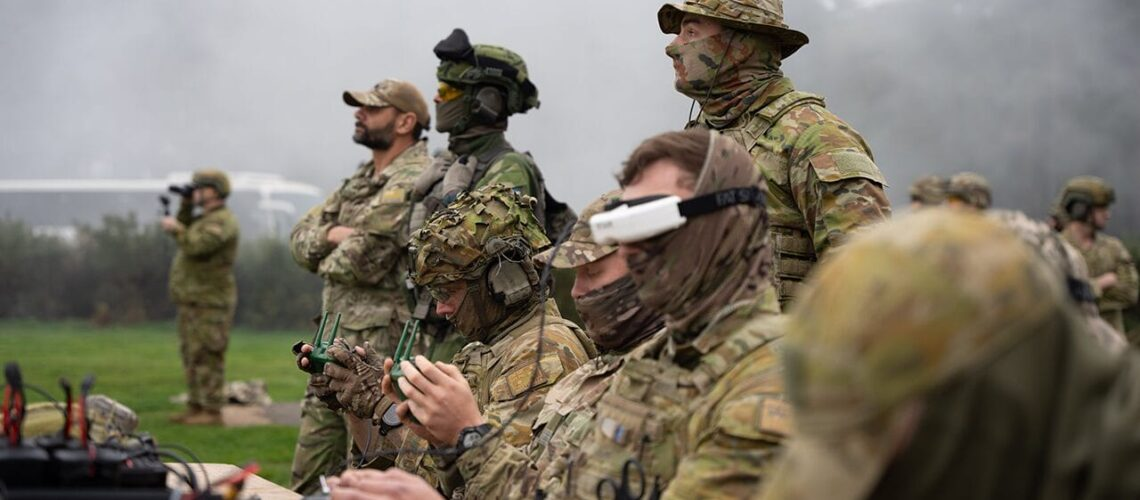
Soldiers in camouflage operating drone controllers in a misty field.

What we cover

What we cover.

Across training, field feedback and OPFOR, the ground we work includes:

  • FPV strike
  • Heavy-bomber drones of the Vampire class
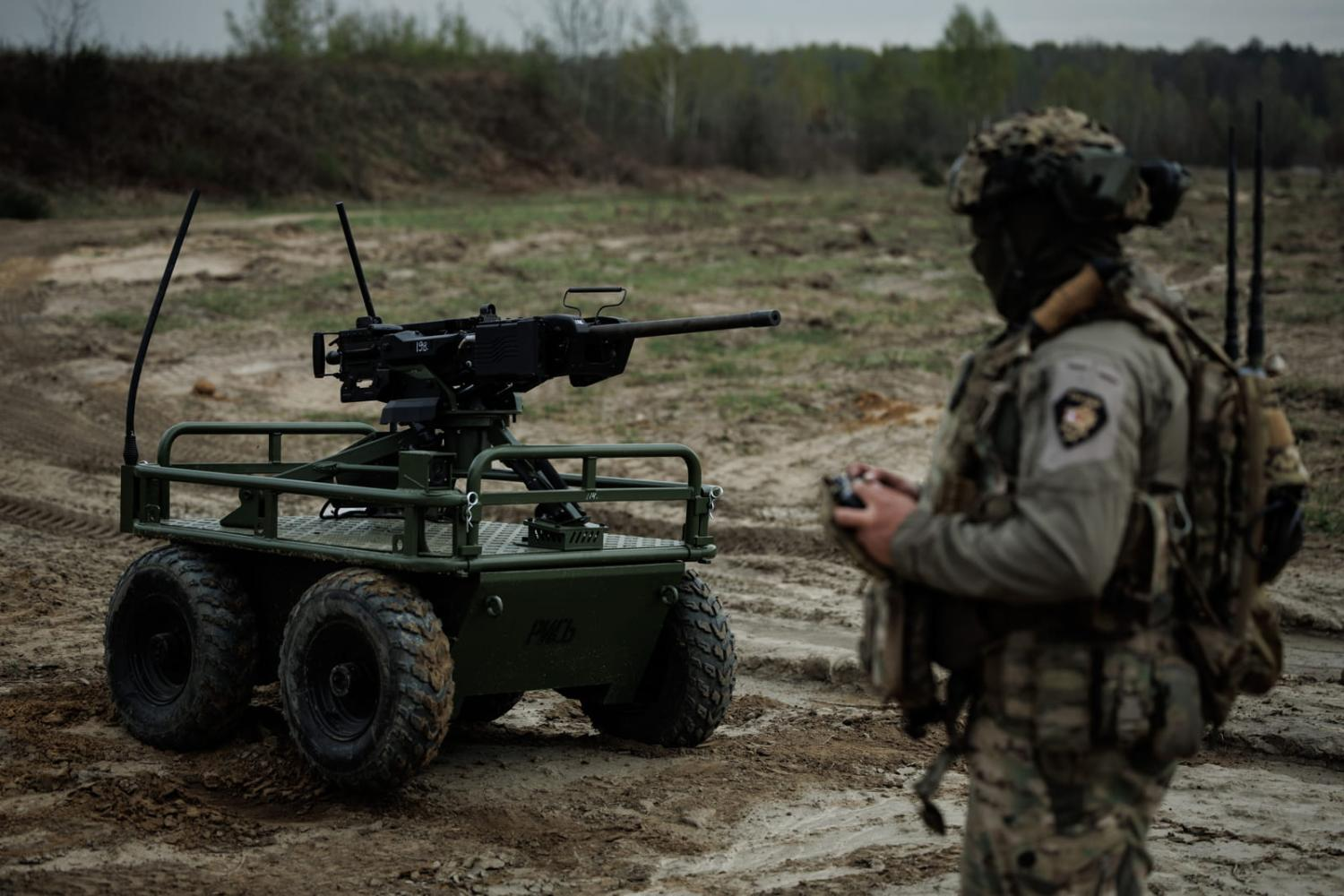
  • UGV casualty evacuation
  • Repeater drones for extended range
  • Interception of ISR drones
  • Fibre-optic drone piloting
  • Building and running a drone C2
  • Deep-strike mission planning
  • Reconnaissance and ISR

What we bring

What we bring.

Four lines of work, anchored in one aim: making your people independent.

  • Training, from operator to instructor.

    We take your people from first flight to instructor level across the profiles that decide engagements today: FPV, fibre-optic FPV, ISR, heavy-bomber and strike. Our priority is train-the-trainer. We do not want you tied to us. We leave behind certified instructors who keep producing pilots inside your own structure long after we have gone.

  • Red team and OPFOR.

    We play the adversary with his real tactics, not a sanitised version of them. Equipped with the same drones and the same methods seen on the ground today, we put credible pressure on your manoeuvre units and on your counter-drone posture, then hand back a clear reading of what held and what did not.

  • FAB LAB development.

    The Ukrainian lesson is that production belongs close to the user. We help a unit stand up its own assembly and repair capability, from bench to flight, so it can build, fix and adapt its drones at its own pace rather than wait on a supply chain.

  • Doctrine and frontline feedback.

    We turn current ground experience into doctrine notes and tactics memos written for your unit, not for a brochure. Because the picture keeps moving, so do they: the material is revised rather than frozen the day it is handed over.

Why this works

Why this works.

Cost-effective, and usually outside the tender process.

Our format fits within the budgets a unit controls directly, which in most cases avoids a full procurement cycle and the months that come with it.

Built to make you autonomous.

The point is not a dependency. We train your trainers and leave the capability inside your structure, so the value stays after we have gone.

Immediate deployment, with our own training drones and simulators and our own people.

We arrive with the drones, the simulators and operators who have current ground experience, and we speak your operational language from the first hour, in English, French, German, Spanish, Turkish, Arabic, Danish and Portuguese.

Kept current over time.

Tactics and technology keep moving, and so do we. We maintain the link so your people stay up to date rather than trained once and left behind.

No copy-paste of Ukraine.

The lesson travels, the situation does not. We adapt what works on the ground to your army, your constraints and your present needs.

Manufacturer independence.

We train you on tactics and on getting hands-on with the kit, but we are not tied to a single type of drone. You inherit the capability, not a dependency on one supplier.

Our training resources

Our training resources.

What makes the training real rather than theoretical.

  • A 25 km² range in western Ukraine where we fly without restriction, live-explosive exercises included.

  • Access to further flight zones in Estonia, Poland, the United Kingdom and France.

  • A fleet of deployable military-grade simulators to train your teams on site.

  • An OPFOR kit that makes the opposing force credible: grenades and FPV drones fitted with sensors that score the neutralisation of dismounted infantry, vehicles and command posts.

  • Training equipment: training drones, training UGVs, real target sets including Shahed-type airframes, and adversary platforms for OPFOR such as VT40, Orlan, KVN, Ababil and Cai Hong-4.

  • 21 ready-to-deploy courses, built and waiting to be run for your forces.

  • An established certification pipeline, instructors included, that checks competence at the outset and keeps it current through regular revalidation.

How we engage

How we engage.

  1. Step 01

    Why units bring us in. Independent of every manufacturer, so the advice answers to performance and not to a sales target. A French company, capital and leadership wholly French, present in Ukraine without interruption since 2022. Around 80 pilots, engineers and operators in the network, each put through demanding selection on competence and integrity before they work a mission. These are the points that carry weight when you take the case to your own command and procurement chain.

  2. Step 02

    Scoping with your command and instructor cadre. We read your current posture before proposing anything.

  3. Step 03

    A programme built around your platforms, your scenarios and your rules of engagement.

  4. Step 04

    Delivery wherever it serves you. You come to our ranges, or we come to your base with everything we need, drones and simulators included.

  5. Step 05

    A written handover of gaps and next steps, so progress does not leave with us.

  6. Step 06

    What you keep. When we leave, the capability stays. Your own certified instructors, your own doctrine kept current, and where it applies, your own ability to build and repair. Where you need it, we can also help you have the certification earned in your unit recognised within your own armed forces, so it carries real legal and military weight rather than staying an internal record. The aim of every engagement is the same: you should need us less over time, not more.

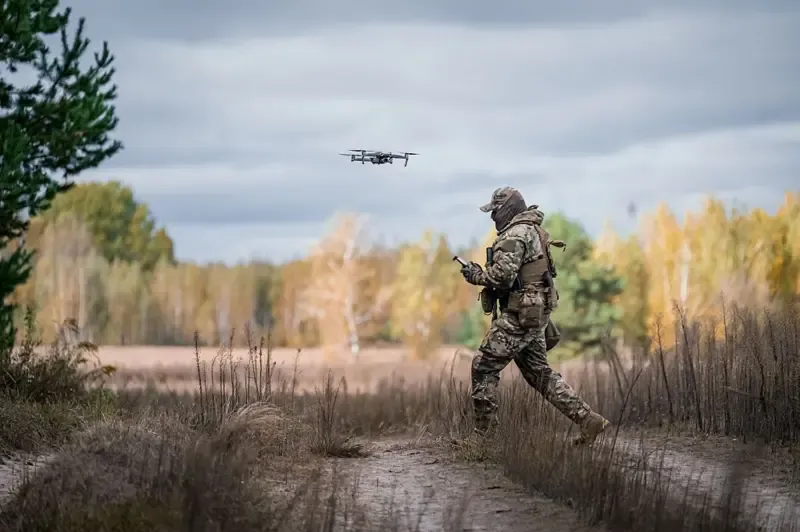
FPV drone hovering low over a misty training range.

You understood the drone war. We help you win it.

Missions we have run

Missions we have run.

A few anonymised examples. Client and unit identities stay protected.

55 days

14 all-round instructors.

Over 55 days we took serving soldiers with no drone background and built the fundamentals from the ground up, piloting, radio, assembly, explosives and repair, flown across scenarios from ISR to FPV, heavy-bomber and interception. The 14 came out certified and able to train new pilots themselves inside their own army.
5 days

Standing up a drone C2.

For a brigade of a partner nation, we ran an officers' conference and then a 5-day course on how to organise a drone command and control in practice, at brigade and company level. We worked through what to field and how to divide the effort between ISR, strike drones and the soldiers on the ground.

2 days

OPFOR for a mechanised exercise.

For a mechanised regiment, we spent 2 days playing the opposing force with heavy-bomber and FPV drones, putting realistic Ukrainian-style pressure on troops in manoeuvre, then gave a concrete debrief on what to fix.

8 days

Counter-drone training for an infantry regiment.

Over 8 days we showed an infantry regiment how to bring a drone down with a shotgun, how to handle one once it is on the ground, how to use Chuika-type detection units, how electronic-warfare jammers work, how to build a concealed position and how to stay hidden from thermal cameras. 44 soldiers came out trained and certified.

18 days

Anti-Shahed interception.

For a partner ministry of defence, we trained 8 pilot-navigator pairs and 4 radar technicians to intercept Shahed-type and long-range drones with interceptor drones. After 18 days they could hold a watch over their airspace and run interception missions on their own.

9 days

In-unit production of an all-round drone.

For a special forces regiment, we worked alongside their in-house FAB LAB as it built up its competence and developed its own drones, among them a flying wing with a plug-and-play payload that shifts from medium-range ISR to medium-range FPV to an autonomous medium-range loitering munition. A reliable prototype was flying within 9 days, and it is in service in the regiment today.

Silhouette of a soldier launching a reconnaissance drone at dawn.

You have seen where war is going. We help you get there first.

Start the conversation

Start the conversation.

The first step is simple, and it costs you nothing. Invite us to your unit for a short field debrief: we come, we share a focused reading of what we are seeing on current theatres, and we get a sense of where you stand. From there we work out together what would move you forward. Training follows once we both know what you actually need.

Invite us to your unit